Do you need a visa
for Zhangjiajie?
Two routes in without a visa — 30-day unilateral entry for 50 passports, 240-hour transit for 57 — and what immigration will actually ask you.
China now runs three parallel entry schemes, and they are easy to confuse. For a Zhangjiajie trip, only two matter:
- Unilateral visa-free entry — 30 days, no onward ticket needed, for ordinary passports from 50 countries.
- 240-hour (10-day) transit visa-free — for 57 nationalities, but you must be transiting to a third country and enter through a designated port.
Which one applies depends on your passport, not on how long you plan to stay.
Which rule applies to you
| Your passport | Route in | Conditions |
|---|---|---|
| EU states, UK, Australia, NZ, Japan, Korea, Canada, Brazil, Chile and others (50 total) | 30-day visa-free | Ordinary passport, tourism purpose, no onward ticket required |
| United States | 240-hour transit | Confirmed onward ticket to a third country; enter at a designated port |
| India, Philippines, most African and Middle Eastern passports | Standard visa | Apply at a Chinese embassy or visa centre before travel |
The 30-day scheme currently runs to 31 December 2026 for most listed countries (Russia to December 2027). It has been extended repeatedly, but do not assume it will be extended again.
How the 240-hour transit works
Citizens of 57 countries — including the US, Canada, Brazil, Mexico, Argentina, Chile, Australia, New Zealand, Japan, Korea, Singapore, the UK and all EU states — can enter China without a visa for up to 240 hours when transiting to a third country or region.
- You must hold a confirmed onward ticket leaving China within 240 hours, to a country other than the one you arrived from.
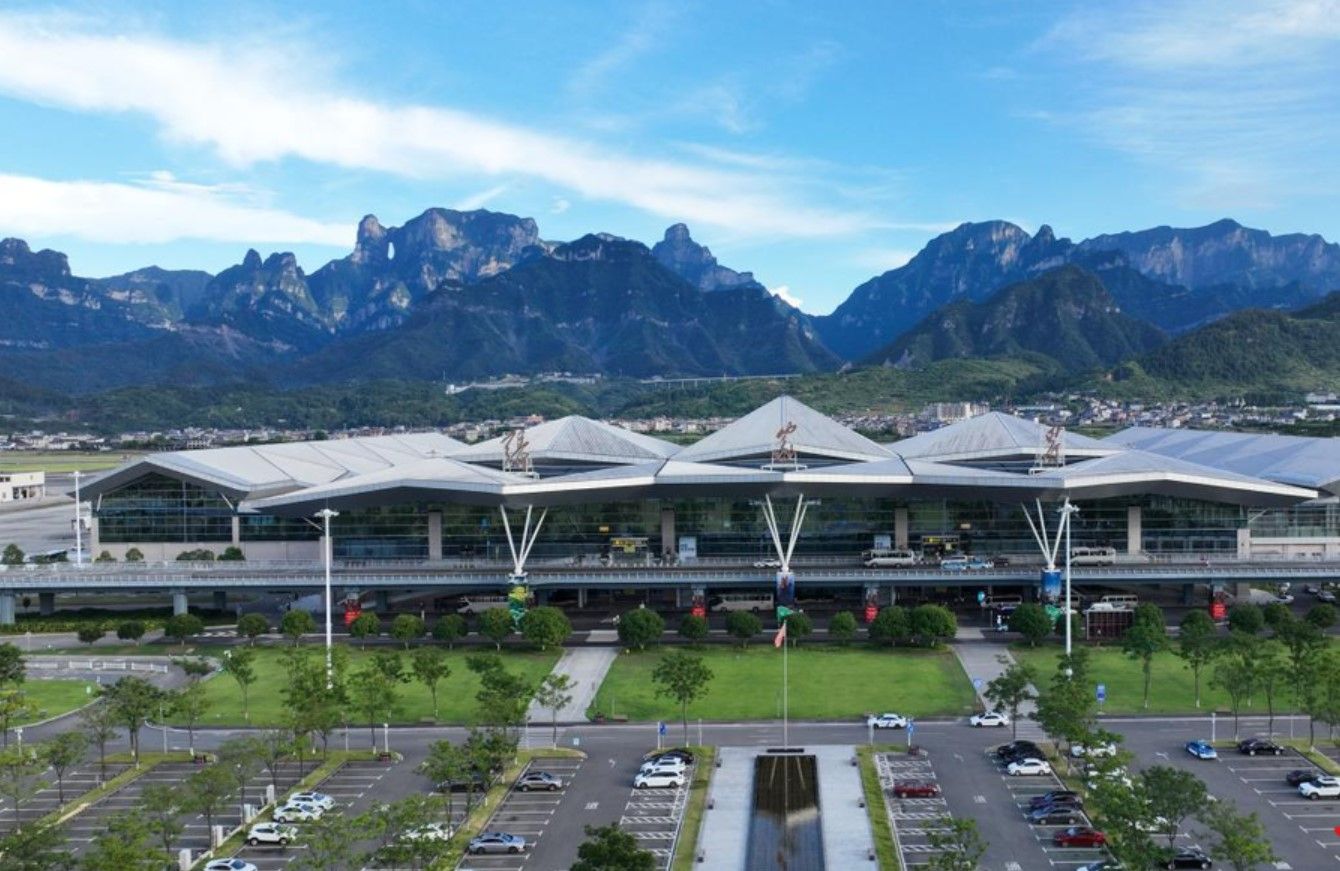
- You must enter through one of the 65 designated ports. For Hunan, the practical gateway is Changsha Huanghua (CSX); Zhangjiajie’s own airport has limited international service.
- You must stay within the approved region. Hunan is fully covered, so Zhangjiajie, Fenghuang and Changsha are all fine.
- The clock starts at 00:00 on the day after arrival — so a Monday landing gives you until the following Thursday.
Flying into Shanghai or Beijing and connecting domestically to Zhangjiajie also works, provided both legs are within the permitted region and you keep the onward ticket.
At the border
- Fingerprints and photo at the e-channel or counter; foreign passports usually use a staffed lane.
- Arrival card — increasingly digital, but paper forms still appear. Fill in your first hotel address.
- Proof of stay — hotel bookings for the whole trip. Have them downloaded, not just in an email inbox that needs data.
- Onward ticket — required for transit entry, and occasionally asked for on visa-free entry too.
- Purpose — “tourism” is a valid answer under both schemes. Working, studying or reporting requires a visa.
Screens fail at the wrong moment. Save your hotel confirmations, return ticket and insurance as PDFs on your phone, and keep one printed copy in your bag.
After you land
Buy a travel eSIM before you fly or pick up a local SIM at the airport with your passport. Install Alipay and WeChat before arrival and link a card — both are needed for payments, transport and the ticket mini-programs. Google Maps does not work well in China; download Amap (Gaode) instead, which has an English interface and offline maps.
Common questions
Can US citizens visit Zhangjiajie visa-free?
Do I need an onward ticket for the 30-day scheme?
Is Hunan included in the transit region?
What if my passport is not on either list?

Now the fun part
Pick a route that fits your days and skip the guesswork.