Zhangjiajie weather,
month by month
Temperatures, rain, fog and crowd levels for all twelve months — and what each one does to your photographs.
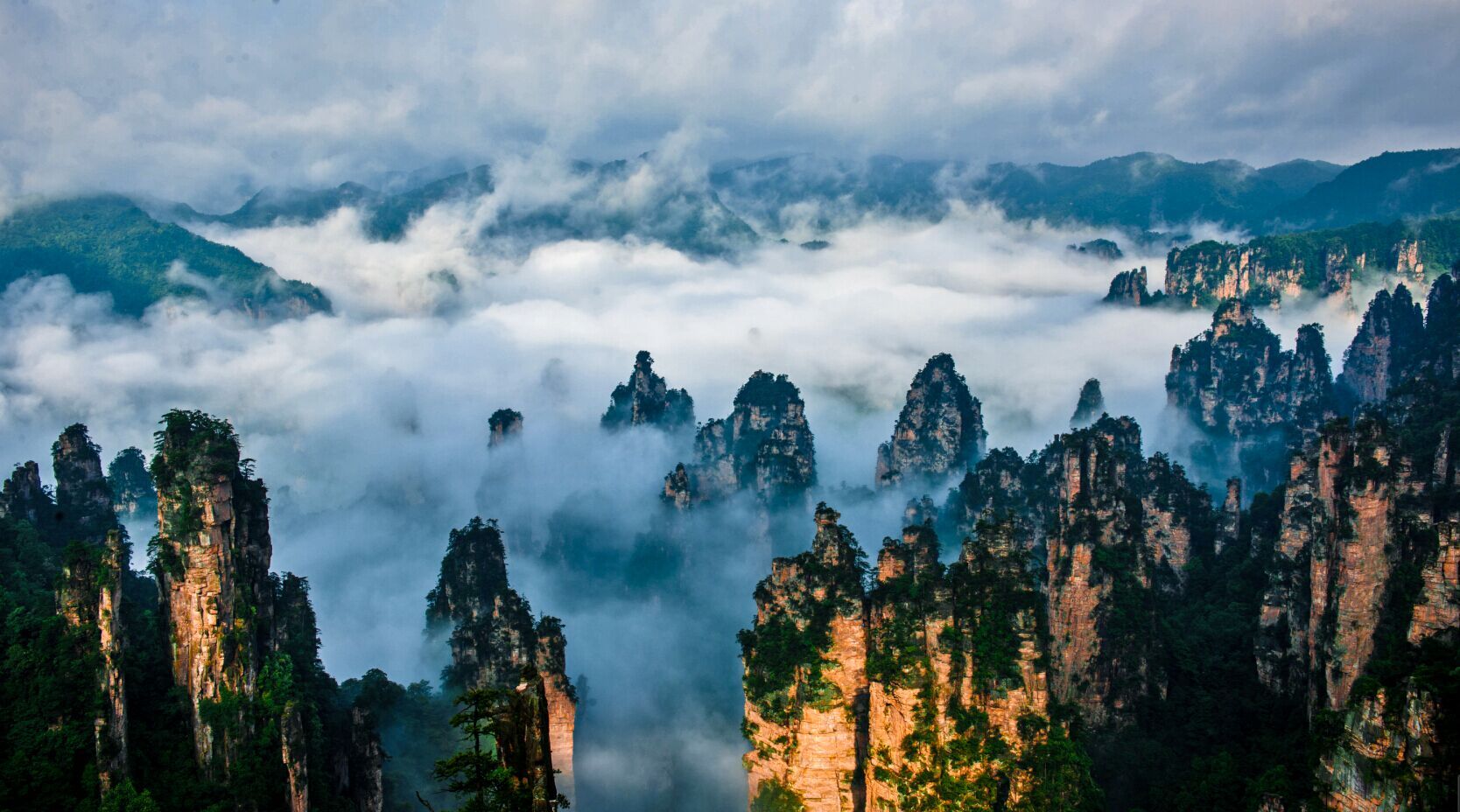
Zhangjiajie has four genuinely different seasons, and the weather decides what you actually see. Clear air gives you the postcard; low cloud gives you the photograph that looks like a Chinese ink painting; heavy rain gives you nothing at all.
This is the month-by-month version, with the trade-offs stated plainly.
The twelve months
| Month | Temp (°C) | Rain | Crowds | Verdict |
|---|---|---|---|---|
| January | 2–8 | Low | Very low | Cold, quiet, best snow and cloud |
| February | 4–10 | Low | Spikes at CNY | Avoid Spring Festival week |
| March | 8–18 | Medium | Low | Green returns, misty mornings |
| April | 12–23 | Medium | Medium | One of the two best months |
| May | 18–28 | Medium | High 1–5 May | Excellent outside the holiday |
| June | 22–32 | High | Medium | Hot, wet, lush, cheaper |
| July | 25–35 | High | Very high | Peak season, afternoon storms |
| August | 25–35 | High | Very high | Busy until the last week |
| September | 18–28 | Low | Medium | Ideal from mid-month |
| October | 12–23 | Low | Very high 1–7 | Perfect after the 8th |
| November | 8–18 | Low | Low | The best-kept secret |
| December | 3–10 | Low | Very low | Cheap, cold, dramatic |
The short answer
Best overall: 20 September – 10 November. Clear skies, 15–25°C, and the summer crowds gone after the first week of October.
Best for photography: November to January, when temperature inversions fill the valleys with cloud at dawn.
Best for budget: December to early March, excluding Chinese New Year, when hotel prices drop 30–50%.
Worst: 1–7 October, 1–5 May, and the week of Chinese New Year. Not because of the weather — because of the queue for the elevator.
The four seasons, on the ground
Same mountain, four different photographs. This is what each season actually looks like at the viewpoints, rather than what the temperature table says.
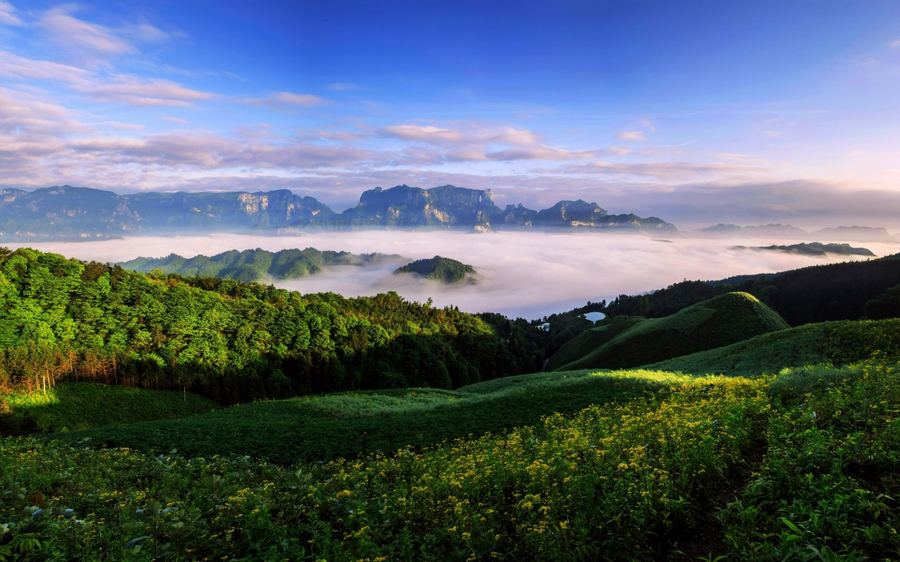
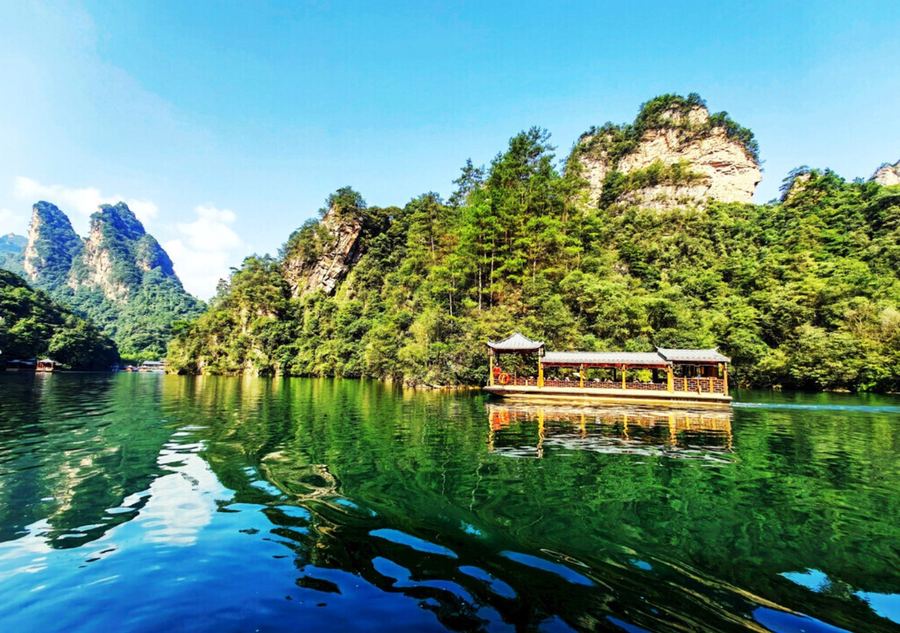
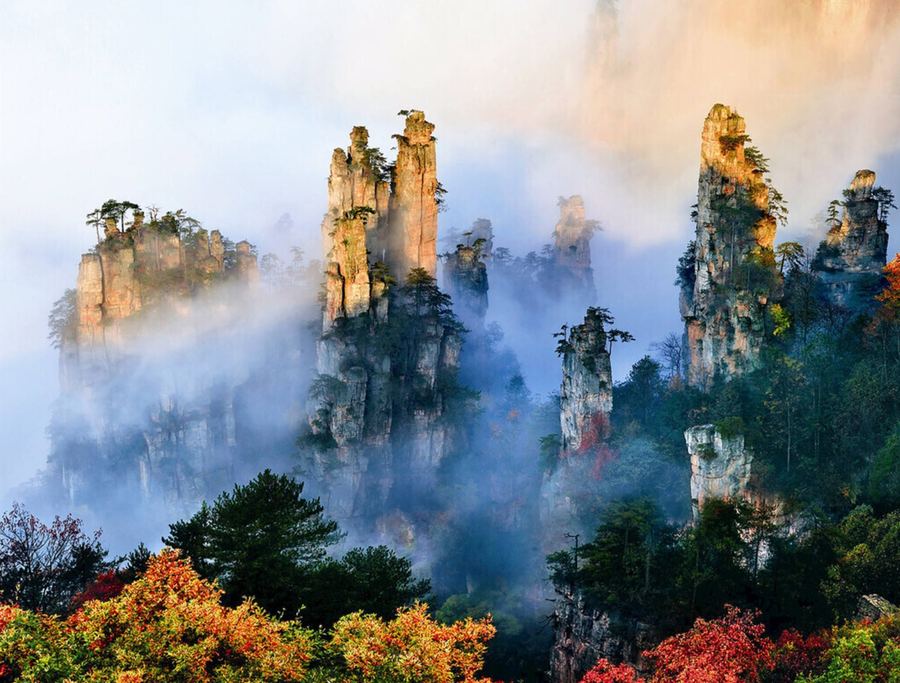
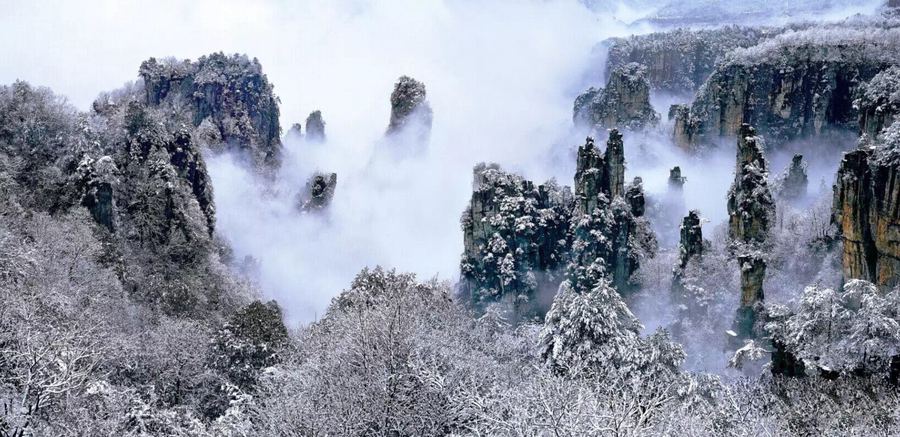
Two of these are worth planning a trip around: late October for colour and clarity, January for snow and cloud. July and August are the two to avoid unless school holidays leave you no choice.
Why fog is not always bad news
Zhangjiajie sits in a basin of forested hills, and moisture gets trapped between the peaks. On a humid morning you get fog; on a clear cold morning after rain you get a sea of clouds — the layer that makes the pillars look like islands.
The recipe: rain the day before, a cold clear night, then a warm humid dawn. November to February delivers this most often. Be at the gate for opening; the layer usually lifts by 10:30.
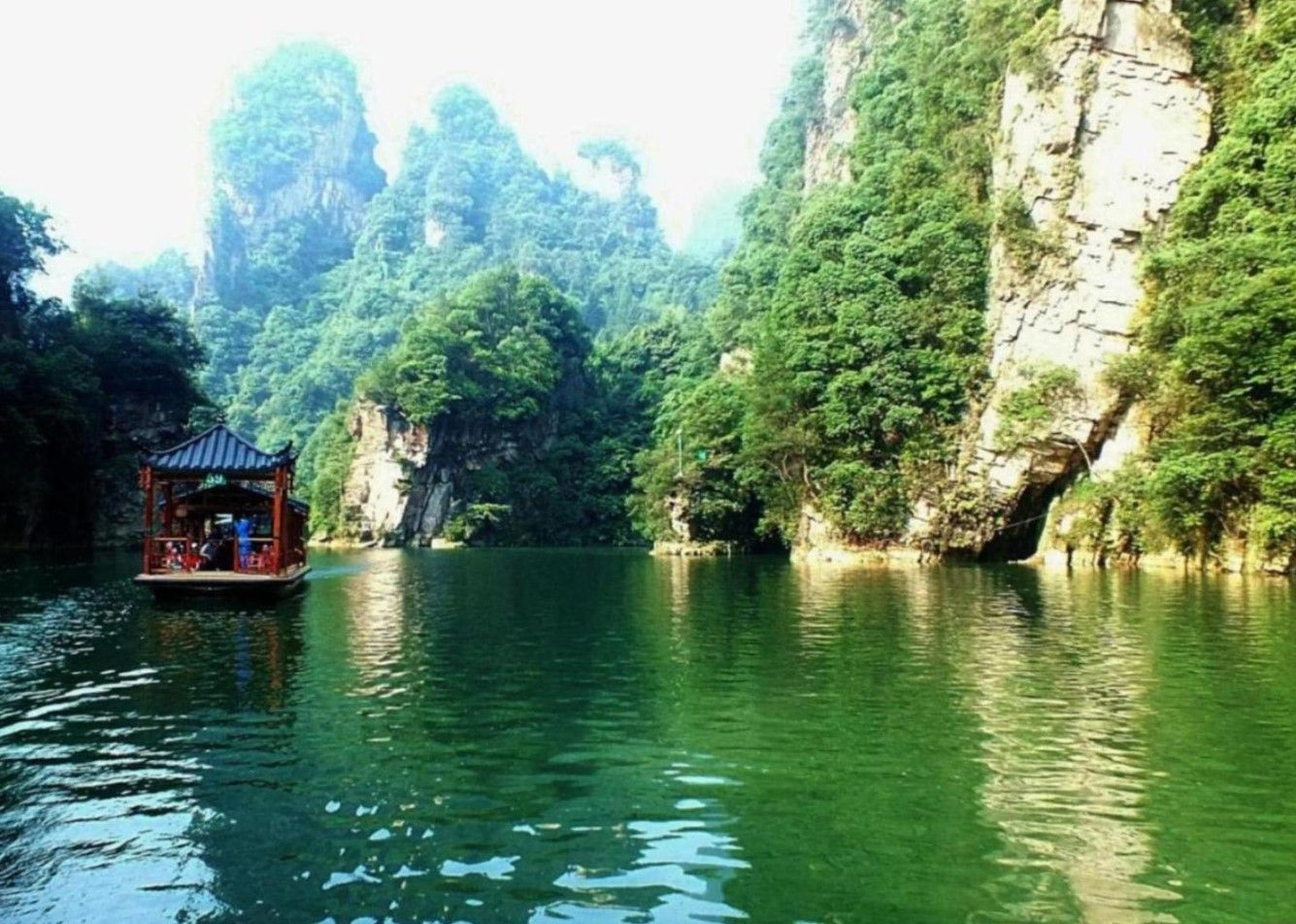
If the cloud is down, do not burn a park day. Golden Whip Stream in rain is genuinely beautiful, Huanglong Cave is weatherproof, and Baofeng Lake looks better in mist. Hold the plateau for the next clear morning.
What to pack, by season
- Spring (Mar–May): layers, light rain shell, trail shoes. Mornings 8–12°C at altitude.
- Summer (Jun–Aug): quick-dry shirt, sun hat, poncho, 2 L water capacity. Storms arrive after 15:00.
- Autumn (Sep–Nov): the easy one — fleece, shell, jeans or hiking trousers.
- Winter (Dec–Feb): thermal base, down jacket, gloves, hat, waterproof boots. Trails can ice over.
Common questions
When is the rainy season?
Does it snow?
Is summer unbearable?
Now the fun part
Pick a route that fits your days and skip the guesswork.